Vindunor now publishes new and updated EPDs in days, so it answers customer and tender requests quickly.
Full data ownership
100% in-house EPD creation
Vindunor's own team handles every EPD, from data collection to publication, without external consultants.
Lower EPD costs
Recurring consultancy fees cut
Internal workflows replace paid consultant work for each new or updated declaration.
Vindunor scales EPD creation in-house to meet growing market demand
Challenge
When Danish construction regulations began requiring documented carbon data, Vindunor recognised that EPDs would become essential for market access. The company relied entirely on external consultants to produce them — a process that was costly, slow, and offered little internal visibility. Generating or updating an EPD could take months, limiting Vindunor's ability to respond to customer requests and tender requirements at the pace the market demanded.
Solution
Vindunor implemented One Click LCA's EPD Generator to build a fully in-house workflow, enabling internal staff to produce and update verified EPDs independently. Using automation and standardised datasets, EPD generation was integrated into daily operations, giving the team full visibility over data inputs and assumptions. Structured onboarding with hands-on, step-by-step guidance helped the team build genuine understanding of LCA principles — not just tool proficiency.
Outcome
EPD turnaround dropped from months to days, costs decreased, and data quality improved as the team now fully understands and controls their inputs. Beyond efficiency, bringing EPD expertise in-house strengthened Vindunor's sustainability culture — engineers, designers, and management now share a common understanding of carbon impacts. The capability has also become a commercial asset, allowing Vindunor to respond to customer documentation requests quickly and credibly.
"The biggest advantage is knowledge. By doing it ourselves, we learn every time. That's something we would never get by outsourcing.
We've reduced the turnaround time dramatically. What used to take months now takes days — and the quality is actually higher because we know the data and how it's structured."
Full story
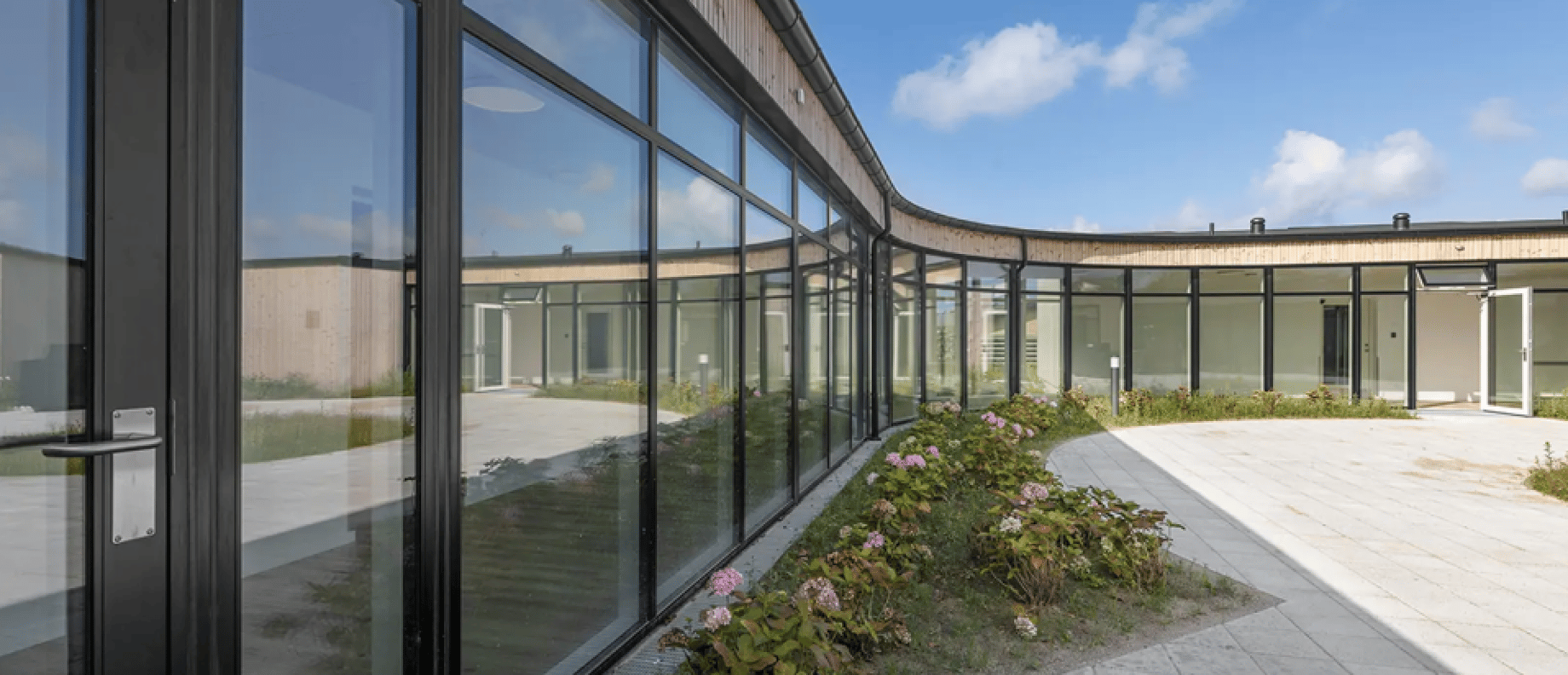
Vindunor is a Danish manufacturer of high-performance windows and doors supplying the Nordic construction market. The company’s product range is widely used in both residential and commercial buildings where durability, energy performance, and aesthetic quality are key.
As sustainability requirements expand across Europe, Vindunor is aligning its business strategy with the growing need for transparent and verified environmental data.
Challenge: rising EPD demand and reliance on external consultants
When Danish construction regulations began requiring documented carbon data, Vindunor quickly recognized that Environmental Product Declarations (EPDs) would become essential for market access. Initially, however, the company relied heavily on external consultants to produce EPDs.
“Before, we depended on consultants for every single EPD. It worked, but it wasn’t scalable — and we had very little internal insight into how the results were calculated.” – Anders Jensen, Sustainability Manager, Vindunor
This dependence created both cost and operational challenges. Generating new EPDs or updating existing ones could take months, limiting Vindunor’s ability to respond to customer requests and tender requirements.
“We wanted to understand the process ourselves and not have to wait weeks for updates or changes. It was important for us to have control of the data and to build our own knowledge”, says Anders.
Solution: building in-house capability for EPD automation
Vindunor decided to invest in an in-house workflow for creating and managing EPDs. The aim was to enable internal staff — rather than external consultants — to produce verified environmental data for their full product range.
“We wanted our team to be able to handle EPDs independently, from data collection to publication. Once you understand the logic behind it, it’s actually manageable,” Anders said.
Using automation and standardized datasets, Vindunor established a process that integrates EPD generation into their daily operations. This gave the company full visibility over data inputs and assumptions, ensuring each declaration reflects the latest production information.
“Automation helped a lot,” Anders noted. “Now we can update data when production changes without starting from scratch. It saves both time and resources.”
Support and onboarding: learning by doing, not by outsourcing
A key factor in Vindunor’s success was the structured onboarding process and continuous technical support. Instead of relying solely on documentation, Vindunor’s team received hands-on guidance that accelerated their learning curve.
“The onboarding was really good,” Anders recalled. “We got help step by step, and we could ask questions at any time. It felt like there was always someone there to make sure we were doing things right.”
This combination of personal support and self-paced learning allowed the team to become confident users in a matter of weeks. As Anders emphasized, it wasn’t just about learning how to use a tool — it was about understanding the underlying principles of life-cycle assessment.
“It’s not just about clicking the right buttons,” he said. “The training helped us understand the logic behind EPDs — what the data means and how to interpret it correctly. That’s what makes it sustainable in the long term.”
By the end of the onboarding process, Vindunor had a repeatable internal workflow and the confidence to scale EPD production independently.
Results: faster, cheaper, and more transparent EPD production
The shift to in-house EPD creation has delivered immediate efficiency gains. Vindunor can now publish EPDs much faster and respond quickly to customer or project-specific data requests.
“We’ve reduced the turnaround time dramatically. What used to take months now takes days,” Anders said. “It also costs less — and the quality is actually higher because we know the data and how it’s structured.”
Bringing EPD expertise inside the company has also strengthened Vindunor’s sustainability culture. Engineers, designers, and management teams now share a common understanding of carbon impacts and how design decisions affect environmental performance.
“The biggest advantage is knowledge,” Anders summarized. “By doing it ourselves, we learn every time. That’s something we would never get by outsourcing.”
Looking ahead
Vindunor plans to expand its EPD coverage to include new product ranges and variants. The company views in-house EPD management not only as a compliance requirement but also as a strategic advantage for future growth.
“Our customers increasingly ask for documentation,” Anders said. “Being able to deliver reliable data quickly gives us credibility and strengthens our position in the market.”
Key takeaways
100% in-house EPD creation: Eliminated reliance on consultants.
Faster turnaround: Reduced time from months to days.