/buildings_card-fourth.webp)
.jpg)
/menu_Company_Open-positions_card-fourth.webp)

what UK manufacturers need to know
Digital Product Passport (DPP)
Manufacturers of construction products face new Digital Product Passport requirements under the Ecodesign for Sustainable Products Regulation (ESPR) and the Construction Products Regulation (CPR). This page sets out what's changing, when it applies, and how EPD data helps you prepare.
How are EPDs connected to CPR, CBAM, and ESPR?
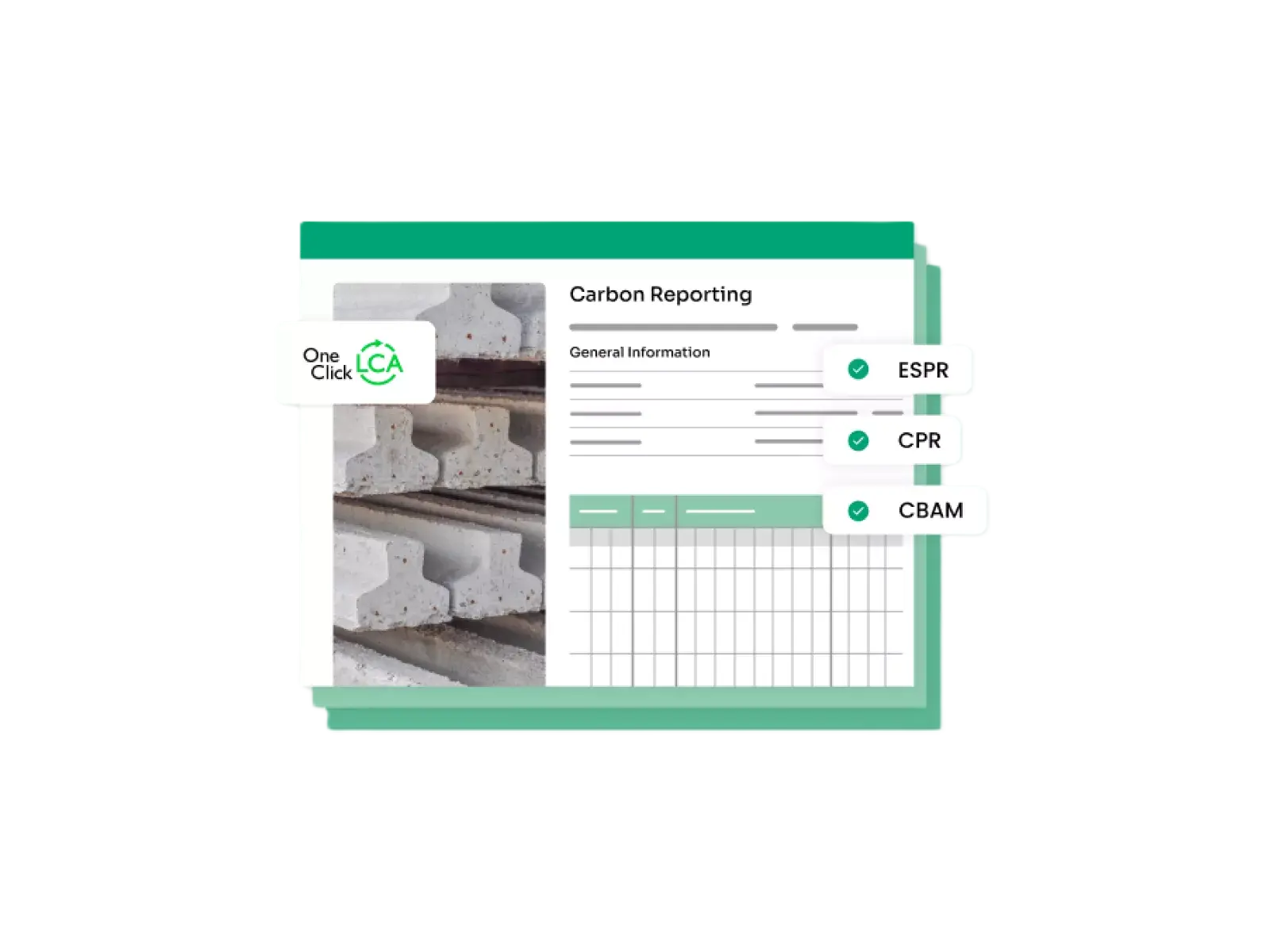
An EPD is no longer just a voluntary document. It is becoming a key part of compliance under new EU sustainability regulations.
- CPR aligns with EPD methodology: Under the revised Construction Products Regulation (CPR), manufacturers are required to publish environmental characteristics where these are defined in the applicable product standard. These disclosures often follow the same data structure and calculation principles as EN 15804-compliant EPDs.
- ESPR connects EPDs through the DPP: The Ecodesign for Sustainable Products Regulation (ESPR) introduces Digital Product Passports (DPPs) across EU sectors. For construction, CPR and ESPR work together to embed verified data into the DPP, like the information EPDs provide, ensuring environmental impacts becomes part of each product's digital record.
- The DPP data carrier makes this information accessible: A Digital Product Passport (DPP) uses a machine-readable identifier, such as a QR code, so buyers, specifiers, and authorities can access a product's verified environmental and compliance data.
Environmental product declarations (EPDs)
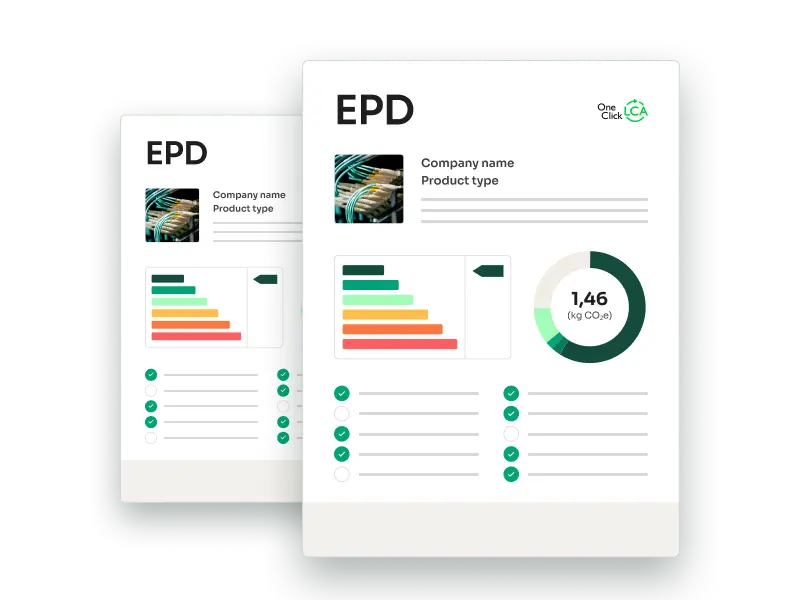
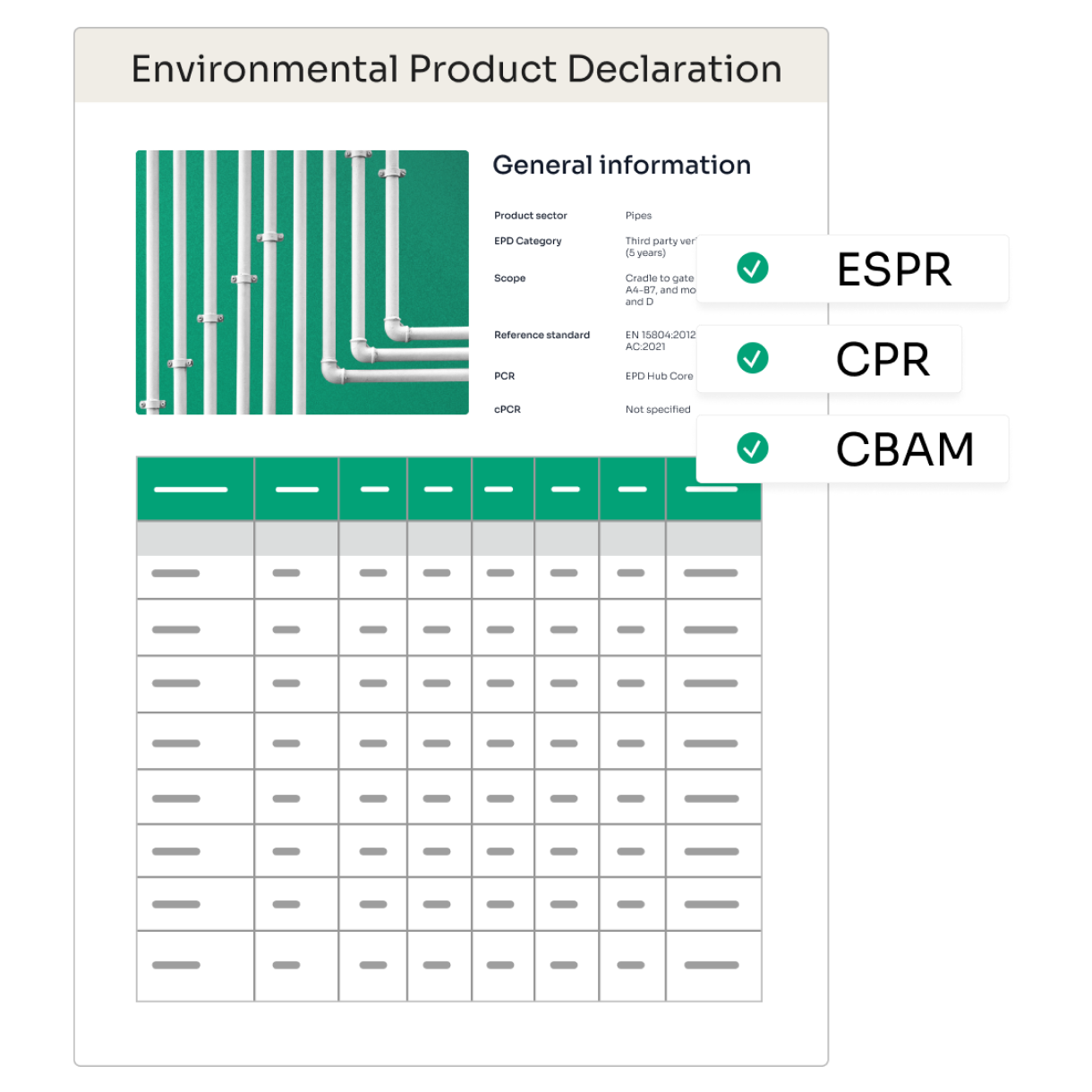
An EPD is a document that transparently reports the environmental impact of a product or material, based on a product life cycle assessment (LCA). The LCA evaluates the environmental effects throughout the product's lifecycle, from raw material extraction to disposal.
Until recently, EPDs have largely been voluntary in the EU, and they remain so in the UK. However, a new wave of regulations — including the CPR, ESPR, and CBAM — is making life-cycle-based environmental disclosures mandatory for many products. These disclosures align closely with the data structure and methodology of EN 15804-compliant EPDs.
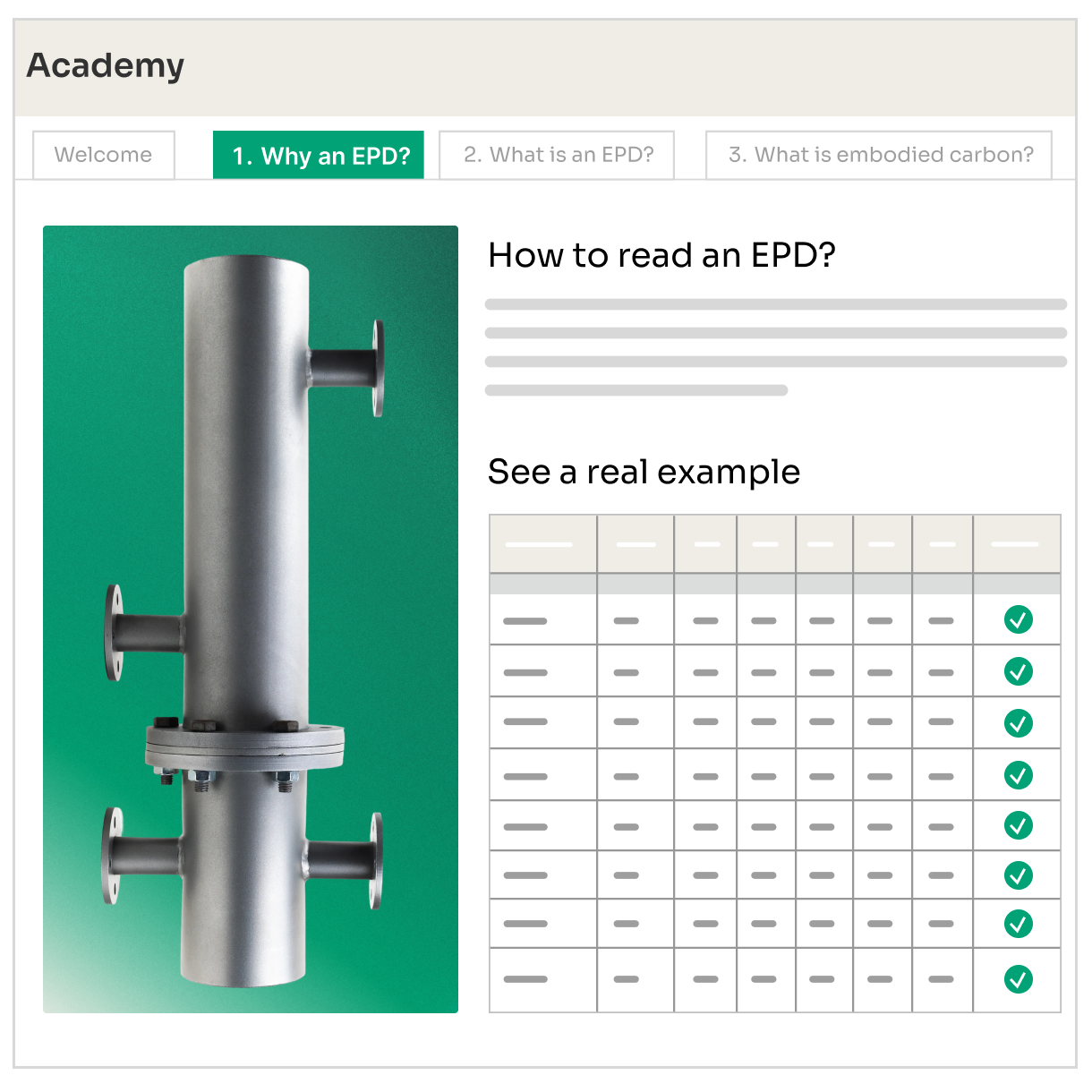
Understand EPDs in 20 minutes
This short course is designed for construction professionals who don’t need to create EPDs themselves — but do need to understand and communicate what they mean.
In under 20 minutes, you’ll learn:- What EPDs are and why they matter
- How to read and interpret an EPD
- How EPDs influence sustainable construction and material choices
No prior knowledge is required. By the end of the course, you’ll have a clear grasp of the essentials and feel confident discussing EPDs with colleagues, clients, and partners.
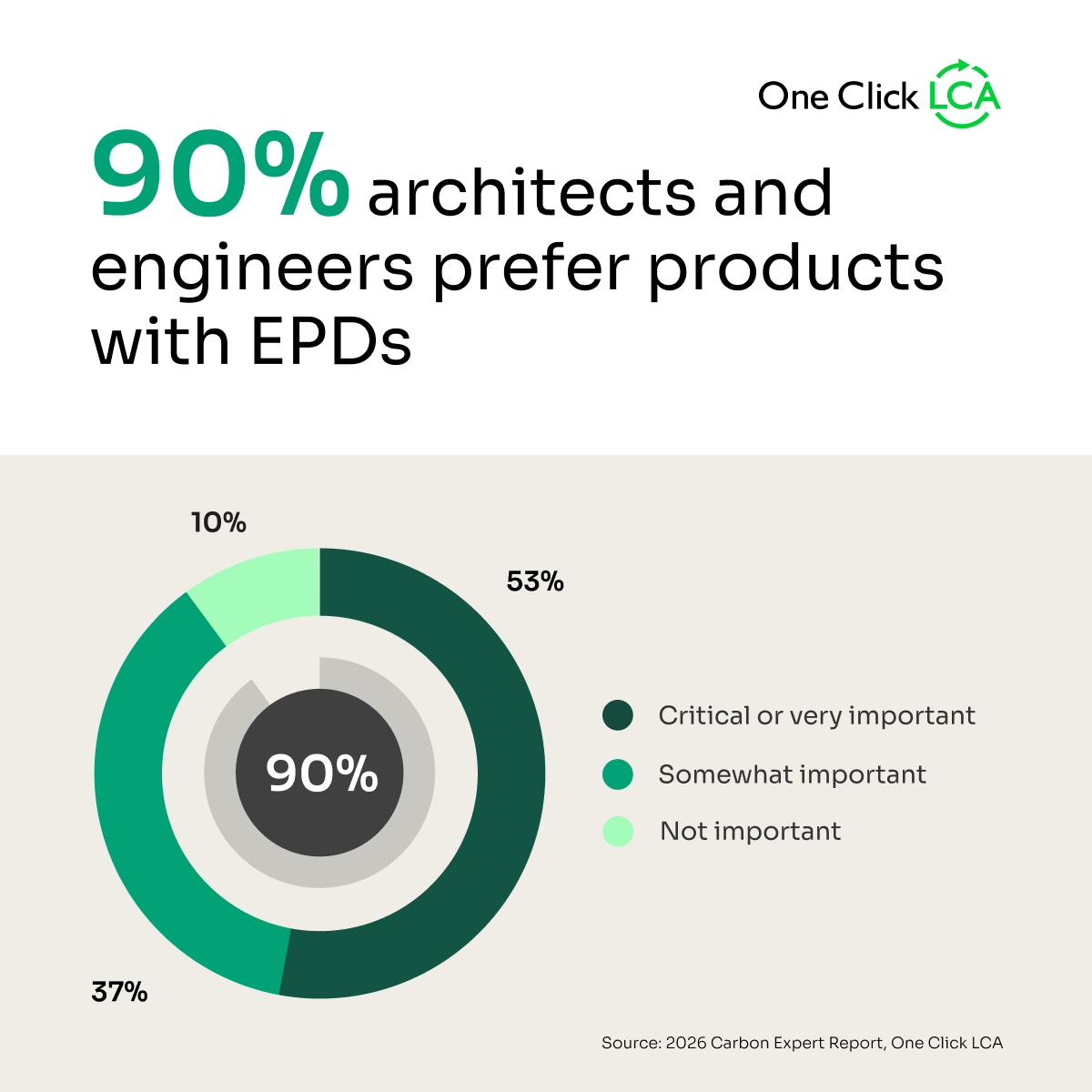
90% of AEC sector prefer materials with EPDs
According to the 2026 Carbon Experts Report, 90% of architects and engineers say that EPDs influence material selection in building projects. This reflects how frameworks such as BREEAM v7, including Mat 01, and RICS Whole Life Carbon v2, are applied in practice, where consistent, verified product data supports assessment and specification.
Materials backed by transparent, third-party verified EPDs are often preferred in procurement, and can form the environmental data layer a Digital Product Passport (DPP) will need. A separate GS1 UK survey found that only 16% of UK exporters feel fully prepared for Digital Product Passport (DPP) requirements, and 79% are concerned about being shut out of EU trade over data gaps.
Take a tour of the EPD Generator
This short product tour shows how the One Click LCA EPD Generator helps manufacturers create EN 15804-compliant environmental data, analyse product performance, and turn results into publishable EPDs. You’ll see how structured life cycle data supports market access, strengthens product positioning, and helps manufacturers stay competitive as sustainability requirements and customer expectations evolve.

Trusted by leading manufacturers










The EPD journey
One Click LCA offers a set of tools and features tailored to support construction products manufacturers throughout their entire EPD journey, from creation to impact and reach analysis of published EPDs.
This guide offers an overview of One Click LCA's EPD solutions and features:
- Scaling EPD production with API integrations
- EPD templates with product-specific, pre-loaded data
- Automation and quality check
- Creating internally verified EPDs (Project EPDs) for tenders and contracts
- Reaching the right buyers with Manufacturer Pages
- Tracking your EPD performance with EPD Usage Analytics
EPD Generator
Create high quality EPDs ready for third-party verification for any product in any industry. The software also allows you to create private EPDs and TM65-compliant calculations. Meet CPR & ESPR requirements.
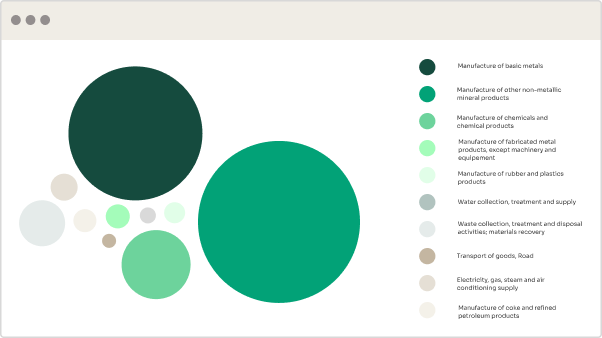
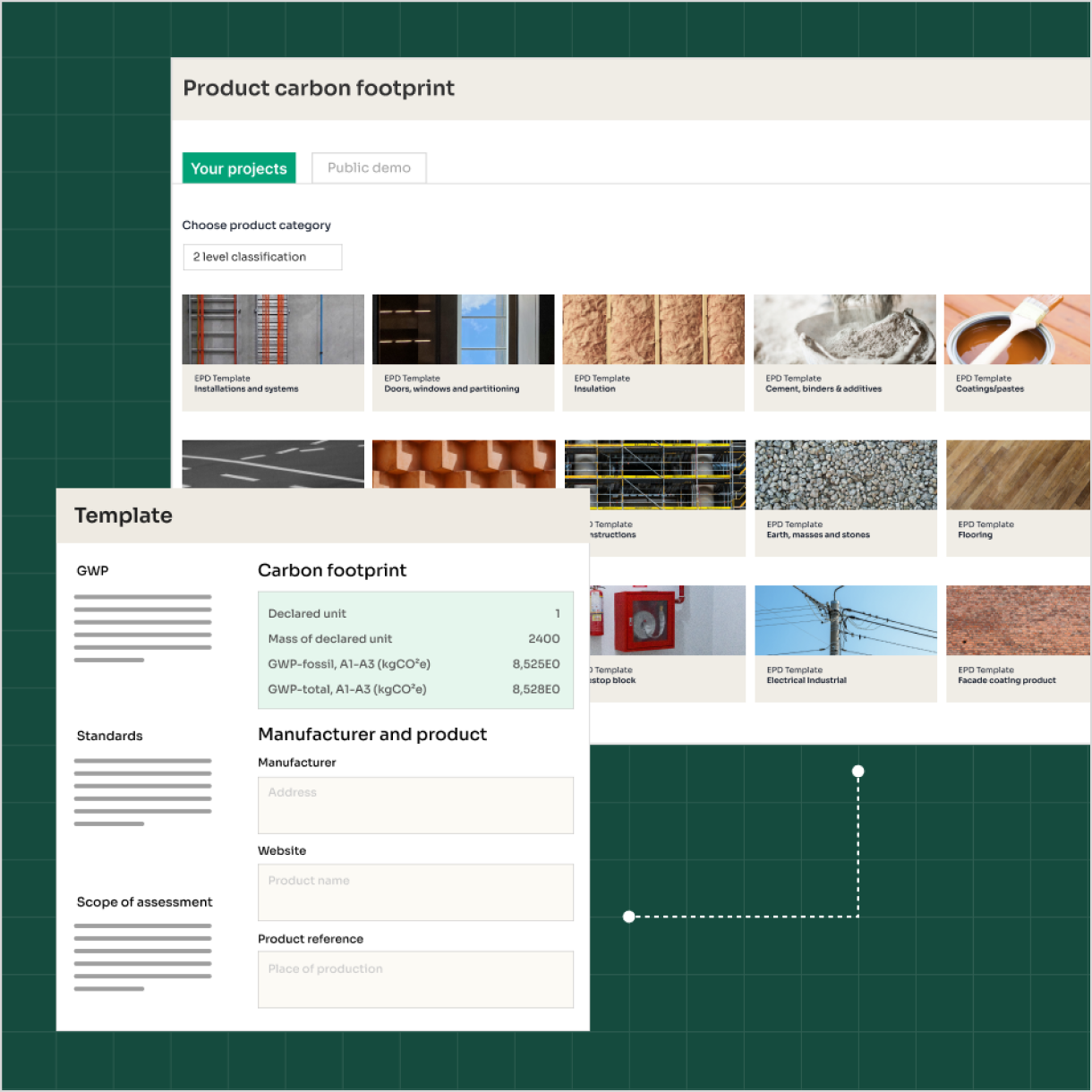
Product Carbon Footprint
Measure and report product emissions from cradle-to-grave with the Product Carbon Footprint (PCF) tool. Calculate carbon footprint and comply with ISOs 14040, 14044, 14067, CBAM and EN 15804.
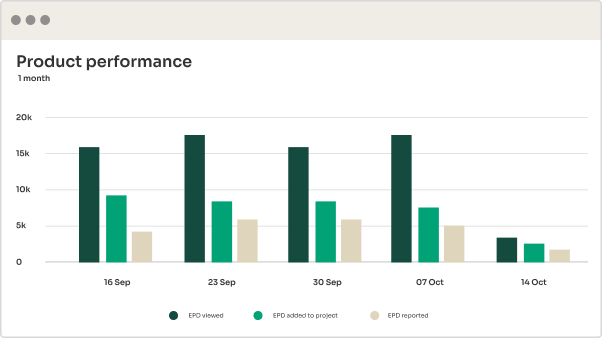
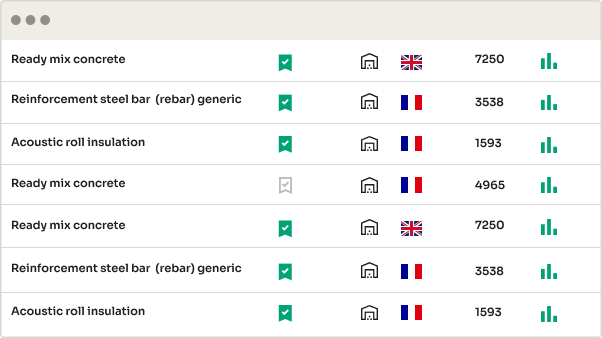
EPD Usage Analytics
Track and analyse how your EPDs perform, giving you a clear view of metrics like the number of views and the level of interest your products are generating.

"Not all of our competitors create EPDs, and since we do, it's a big benefit for us. Some projects we have won because we had the best EPDs and were able to provide answers surrounding them. With more and more need for reduced carbon footprint when building, EPDs will become increasingly important."
Andreas Lidö
Heidelberg Materials Precast Abetong

"A detailed analysis from One Click LCA on our materials led to us identifying a potential 70% reduction in the global warming potential for our LED board. This achievement was made possible by close collaboration with the supply chain and a deep understanding of the carbon data associated with their materials."
Matt Paskin
Solutions & Marketing Director at Whitecroft Lighting

"I was able to make adjustments that reflected regional conditions with a prospect, on-site and quickly. That moment turned into a serious business discussion. The tool enables not just compliance, but growth."
Steven McLaughlin
Operations Manager at OTB Materials