/buildings_card-fourth.webp)
.jpg)
/menu_Company_Open-positions_card-fourth.webp)
/menu_Pricing_Quote_card-fourth.webp)

Industry
Company size
Headquarters
Results
Early-stage carbon assessment
Targeted carbon reductions
Design optimization
Smarter design decisions
Carbon hotspot analysis and scenario modeling identified opportunities to reduce emissions through strategic design changes. Optimizing roadway width and refining the overpass structural configuration delivered meaningful carbon savings while improving cost efficiency.
Data-driven carbon insights
Lower-carbon infrastructure
The challenge: Making strategic sustainability decisions without detailed designs
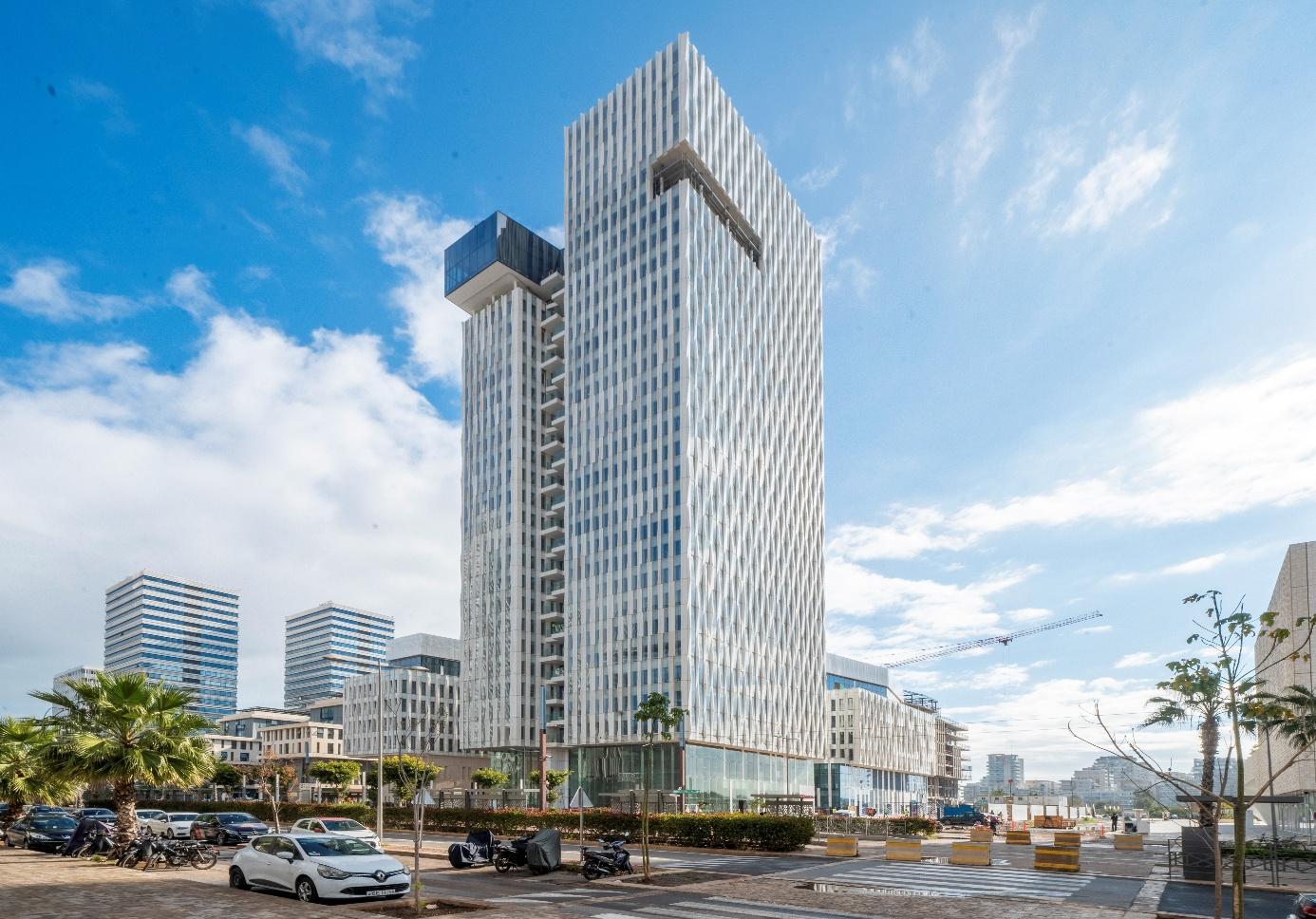
The City of Montréal launched a pilot project to redevelop a major transportation corridor and surrounding district, with the goal of creating a low-carbon, climate-resilient neighborhood aligned with its Climate Plan 2020–2030 and Land Use and Mobility Plan 2050.
To support early-stage decision-making, AECOM was engaged to evaluate preliminary design options and provide whole-life carbon insights.
Since the project was still in the pre-design phase, detailed specifications and Bills of Materials were not available. The city needed reliable carbon estimates to compare two different design concepts, understand carbon interactions between infrastructure and buildings, and ensure the design direction aligned with its climate, urban, and mobility objectives — all before final designs were completed.
The solution: AECOM’s ScopeX Approach + Carbon Designer 3D
AECOM integrated One Click LCA's Carbon Designer 3D tool directly into its ScopeXTM decarbonization workflow, unlocking three critical capabilities:
-
Early carbon modeling without detailed material data
Carbon Designer 3D generated material quantities from preliminary 3D building models using basic dimensions like floor area and building height. These estimates were converted into life cycle carbon impacts for key building elements such as foundations, slabs, façades, and roofs. -
Rapid scenario testing
With Carbon Designer 3D, exploring alternative building configurations and structural systems became fast and frictionless. AECOM could see how different design choices influenced embodied carbon. This was critical during the conceptual phase when decisions have the greatest impact on sustainability outcomes. -
Seamless integration
The automated generation of material quantities and seamless integration into the One Click LCA life cycle assessment workflow eliminated manual data entry, ensured consistent, reliable analysis, and enabled AECOM to consolidate the distinct LCA models for buildings and infrastructure into a single cohesive analysis within the platform.
Outcome: Data-driven carbon insights that cut emissions and optimized costs
The analysis revealed that embodied carbon represented the largest share of emissions, but its magnitude varied significantly by design choice. This insight led to targeted recommendations, including optimized concrete mixes, increased use of recycled steel, and inclusion of environmental product declarations (EPDs).
The modeling approach identified a series of hotspots across the wider scheme, which were then targeted for decarbonization. Scenario modeling showed that seemingly subtle design decisions, such as adjusting roadway width or optimizing the overpass structural configuration, could yield meaningful carbon reductions. These insights informed key decisions early in the design process that supported both decarbonization and cost efficiency.
The City of Montréal embraced the findings, confident in the methodology and ready to advance to the next phase of work. The whole-life carbon analysis not only helped the City compare design options but also provided a strategic roadmap for designing more sustainably as planning progressed.
"One Click LCA played a pivotal role in embedding sustainability into this project by providing actionable insights early in the design process. Using Carbon Designer 3D alongside other tools, we modeled life cycle greenhouse gas emissions for major components across the production, construction, use, and end-of-life phases."
EPD Generator: Get reliable & compliant third-party verified EPDs
Full story
AECOM: Laying the foundation for climate-aligned urban mobility
AECOM, a global leader in infrastructure and professional services, is committed to delivering a better world through sustainable and resilient solutions. In partnership with One Click LCA, AECOM leveraged advanced carbon modeling tools to help the City of Montréal integrate climate goals into the earliest stages of planning for a transformative urban mobility project.
The project
When the City of Montréal launched a pilot project to redevelop a major transportation corridor and surrounding district, it set ambitious objectives aligned with its Climate Plan 2020–2030 and Land Use and Mobility Plan 2050. The five-year redevelopment included a new overpass, mixed-use buildings, upgraded mobility infrastructure, and a new public park.
To support these ambitions, the City appointed AECOM to evaluate two preliminary design concepts using whole-life carbon analysis.
Looking ahead
A new standard for climate-aligned design
This project demonstrates how early-stage carbon modeling can transform infrastructure planning. By integrating AECOM’s ScopeX™ approach with One Click LCA’s tools, sustainability became a driver instead of an afterthought. Together, AECOM and One Click LCA helped the City of Montréal reduce uncertainty, strengthen climate alignment, and make better-informed decisions at the moment of greatest influence and least cost.

Carbon Experts Newsletter
Practical insights on LCA, EPDs, regulations and low-carbon construction — straight to your inbox.